
China Machining Services Sourcing: What to Verify Before You Pay — The Record-Gated Payment Schedule
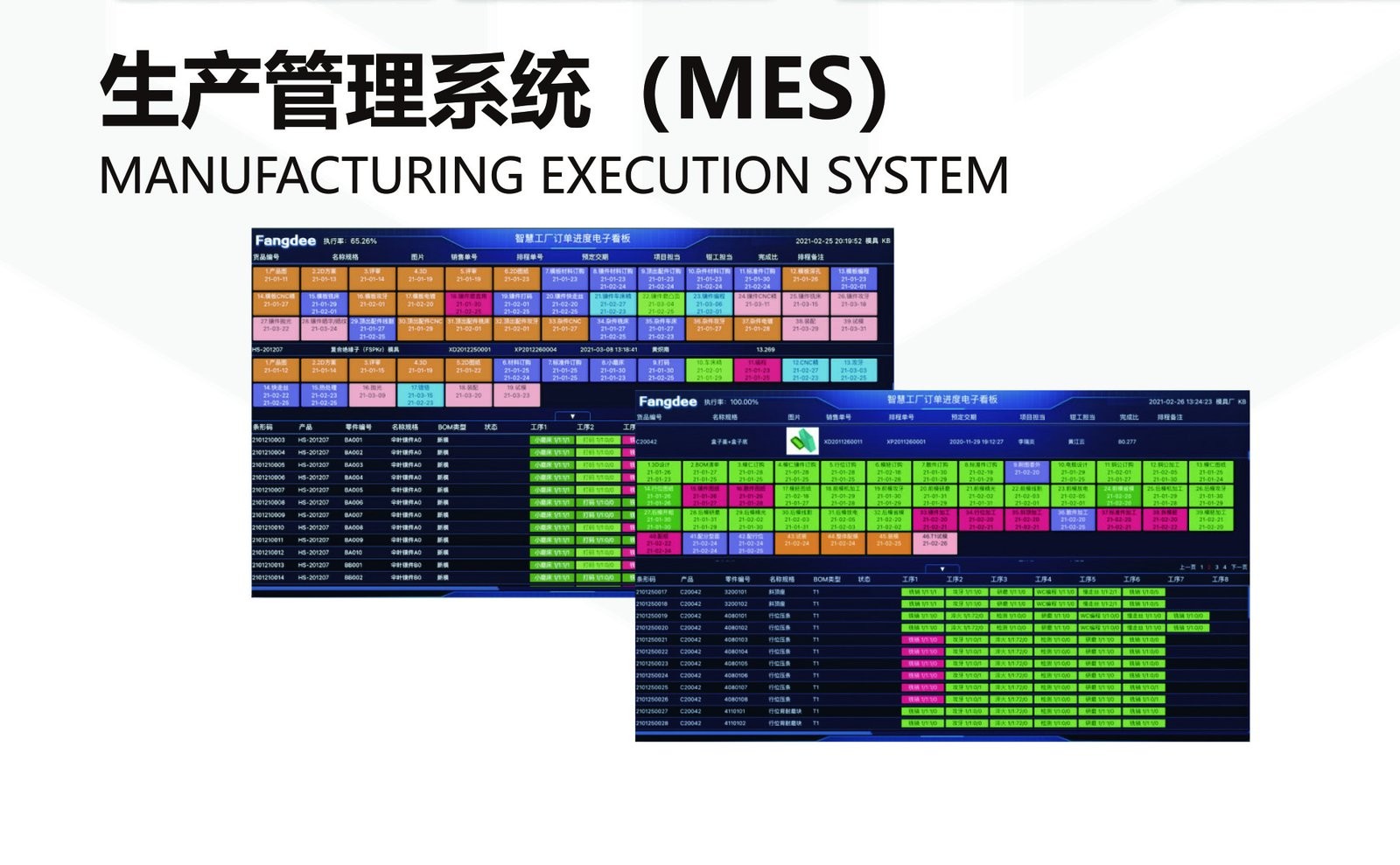
When you source machining services from China without a factory visit, the only physical evidence you can hold before your money moves is a record: the mill certificate for a material lot, the XRF verification that matched it, the MES rows that show a batch running, the inspection results that released it. Everything else you are offered before payment is a promise. This guide turns that asymmetry into a payment schedule. Instead of releasing money on dates or on assurances, you gate each payment behind a record deliverable — a document or data sample that a real traceability chain can produce in minutes and a fabricated one cannot produce at all.
Why should each payment on a China machining services order be released against a record deliverable instead of a promise?
Cross-border payment structures exist because the factory cannot carry the cost of your material and its labor for the weeks your parts are in production. So money moves early: a deposit when the order opens, a progress payment while the batch runs, and the balance before or just after shipment. The calendar is fixed long before you have seen a single part. That is why the payment schedule is the one negotiating lever you still control when you cannot stand on the floor, and the most useful thing to attach it to is not a date but a record.
A promise is future tense. A record is past tense: it states what was actually done, measured, and signed, on a real lot, at a real time. A traceability chain turns this difference into something you can use from a desk on the other side of the ocean. When a supplier records every lot automatically through its MES/ERP system, retrieving a sample is a search that takes minutes. When no such system exists, a "sample" has to be assembled after the fact, and an assembled record is exactly the document you most need to avoid paying against.
Bind each payment to a record deliverable and you have quietly changed the question you are asking. You stop asking "can I trust this supplier?" — a question no document can answer — and start asking "can this supplier produce the record for the stage my money is about to fund?" That question has a right answer that arrives in your inbox, and it is the closest thing to a factory audit you can run from abroad. The full logic of why a recorded chain outlasts a final inspection is laid out on the machining services home page; this guide applies the same logic to the one moment most buyers never audit — the moment they pay.
Which traceability tier does your order need, and why decide that before you discuss any payment split?
Payment structure follows record requirements, not the other way around. Before you negotiate a single percentage, decide how deep the traceability record on your order has to run. That decision is driven by who will hold the part, what it does, and what failure would cost, not by what the supplier happens to offer.
- Tier A — PPAP-level documentation. If your part feeds an automotive program governed by IATF 16949, a medical device, or a safety-critical assembly, the record is the acceptance object itself: first-article inspection, control plan, PFMEA, process capability data, and the submission package your customer's quality team will review. Here the record is not a way to check on the supplier; it is the deliverable you are buying, and the payment gates should treat it that way.
- Tier B — per-lot material and process records. For the large majority of machined components — housings, brackets, shafts, fittings — the practical standard is a material certificate carrying a heat or lot number, an XRF incoming-verification record on that same lot, a batch identifier that follows the parts through machining and inspection, and the inspection results that released the shipment. This is the tier this guide assumes most readers need, and it is also the tier a traceability-equipped shop records automatically on every order.
- Tier C — first-article confirmation plus a certificate of conformity. For a prototype, a one-off sample, or a non-critical part you will qualify yourself on arrival, a lighter record can be honest. The cost of that tier is that your own receiving inspection becomes the only audit that exists.
Set the tier first because it sets the deliverable list, and the deliverable list sets the gates. Asking for PPAP depth on a general bracket pays for documentation nobody will read; accepting a bare certificate on a part that can injure someone buys a risk you cannot insure away later. The cost side of this trade-off — what each level of proof adds to the quote, and where it shows up in the price — is worked through in the machining services cost model, which prices the part and its proof as one line item.
Which three record gates should your payment schedule set?
A workable record-gated schedule needs three gates, and each gate is defined by the record you hold before money moves, not by a week number. The table below is a negotiating structure, not an industry standard: the deliverable in the middle column is the point, and the payment split around it is yours to set with the supplier.
| Gate | Record deliverable you hold before paying | What it proves | Payment it releases |
|---|---|---|---|
| 1 — Material | Material certificate (mill certificate) for a real lot, paired with the XRF incoming-verification record on that same heat or lot number | The chain's first link exists: the grade is what the certificate claims, and the supplier keeps paired records it can retrieve | The opening payment that funds material |
| 2 — Process | A block of consecutive rows from the MES or in-process inspection log for one batch — batch number, machine, timestamps, operator, readings | The run was recorded as it happened, with continuous batch numbers and no gaps a rebuild would have to paper over | The progress payment released while your batch is in production |
| 3 — Shipment | The shipment record pack — material certificate, final inspection report, certificate of conformity, batch traceability sheet — plus a retained-sample clause in the purchase order | The records you approved are the records packed with your parts, and samples exist if a dispute needs a second opinion | The balance before or at shipment |
Two properties make this structure usable rather than theatrical. First, every gate is passable from a distance: the deliverable is an email attachment or a short screen-share, never a "you'll see it when you visit." Second, every gate fails safely: if the record does not arrive, the payment does not move, and no part has been shipped that you cannot still reject in writing. For a first order, treat the three gates as fixed and the percentages as a negotiation starting point. A common opening is a deposit sized to the material value, a progress payment around the midpoint of the run, and the balance on the shipment records. The exact split matters far less than the rule that no gate opens without its document.
How can you tell a record sample is genuine, and not rebuilt after the parts left?
A record-gated schedule is only as strong as your ability to read the sample you are handed. The checks below are directional and general — they work on any supplier's documents without naming any specific company — and they look for the seams that a rebuilt record always leaves behind.
- Batch-number continuity. Ask for several consecutive rows from the same log. Real production batches are sequential; a rebuilt log tends to show gaps, duplicates, or numbers that skip around because someone filled cells in an order that made sense at the desk rather than on the floor.
- Timestamp logic. The sequence must hold across stages: machining time before inspection time, inspection time before the packing date, and every timestamp inside a working shift. A certificate dated after the certificate of conformity that already shipped — or an inspection stamped on a Sunday that the batch calendar cannot explain — is a fingerprint of reconstruction.
- Cross-references that agree. The heat or lot number on the mill certificate should reappear in the XRF record, in the batch identifier, and on the packing documents. If the certificate number on a material certificate does not match the certificate number on the third-party report that supposedly covers it, treat the whole file as suspect until the issuer confirms it.
- Third-party reports sent direct. When a test report comes from an external laboratory or inspection company, ask the lab to send it to your email address rather than accepting a forwarded PDF. Forwarding is where edited reports enter the chain; a report you receive from the issuer is a document you can actually check.
- A live look at the system. For the largest orders, request a short video call in which the supplier opens the MES or ERP screen, types in the batch number, and walks the record. A real system answers in seconds and shows fields a screen-share cannot hide. A supplier whose records live in spreadsheets will hesitate, and the hesitation is your answer.
None of these checks requires you to become a forensic examiner. They require the same habit your own quality department would apply to an incoming supplier: read the seams between documents instead of accepting each page in isolation. That reading habit is the one skill the online supplier screen in the 30-minute record-chain check is built to train, and it transfers directly to the payment gates here.
Which six record-gate requests should you send, word for word?
Every gate in this schedule reduces to a request you can send today. The six messages below are written to be copied, adapted, and sent before each payment. Each one asks for a specific artifact, not a general reassurance, and that specificity is what separates a record gate from a polite email.
- Gate-one sample request. "Before we place the order, could you send me one historical batch's mill certificate together with its incoming XRF verification record, redacted if you prefer? I want to see how the two documents reference the same heat or lot number." A supplier with a real material trace sends this within the day. A supplier without one asks why you need it.
- Gate-one follow-up on retrieval. "For the same batch, could you also tell me which machine it ran on and pull the process rows from your MES system? I am checking how long a full record takes you to retrieve." Retrieval speed is the test in disguise: automatic records come back in minutes, while reconstructed ones take a night.
- Gate-two request. "When our batch starts, could you send me a block of consecutive in-process inspection rows — batch number, machine, timestamps, operator, and readings — from the middle of the run? I want to confirm the batch is being recorded as it runs." This anchors the progress payment to live data rather than to a promise that "production is going well."
- Gate-three request on the pack. "Before shipment, please confirm the documents that will be packed with the parts: material certificate with heat or lot number, final inspection report, certificate of conformity, and a batch traceability sheet. Could you list them in the order acknowledgement so we both know what ships?" Written into the acknowledgement, the pack stops being optional.
- Gate-three request on third-party reports. "If any material testing is done by an external laboratory, please have the lab email the report directly to me rather than forwarding it through your office." One sentence, and a whole class of edited documents is closed off.
- Gate-three retained-sample clause. "In the purchase order, we would like a line stating that the traceability record is part of the deliverable, that retained samples of this batch are kept for twelve months after shipment, and that a missing record is grounds for non-acceptance. Is that acceptable to you?" A traceability-equipped shop signs this clause without negotiation; a shop that has been selling parts without records will push back, and the pushback tells you what you need to know before the balance is paid.
Send the six requests in order and you have, in effect, run a miniature audit across the full life of the order — material, process, shipment — with the payments themselves as the deadline that makes each request meaningful.
What should the purchase order state so a missing record stops the payment, not the parts?
The requests above only bind if the purchase order makes records a condition of acceptance. Three clauses carry most of the weight, and all three are plain-English sentences that no export contract needs a lawyer to translate.
First, define the record as a deliverable. The PO should state that the order includes, as priced deliverables, the material certificate with heat or lot number, the XRF verification on that lot, the in-process inspection log, the final inspection report, and the batch traceability sheet linking material to finished parts. When a record is listed as a deliverable, its absence is a shortage, and a shortage is something a PO already knows how to handle.
Second, make the missing record a non-acceptance event. Add the sentence that the batch is not accepted if any of those documents is missing at shipment, and that the balance payment is withheld until the pack is complete and consistent. This is the clause that turns "records ship with the parts" from a marketing phrase into a term. On this site's traceability system, the record is part of every order by design, and the parts page describes exactly what a part's record contains at shipment. The clause therefore asks the supplier only to commit in writing to what a traced shop already does.
Third, add the retained-sample agreement. If the batch's quality is disputed after arrival — a wrong alloy found in service, a dimension that fails in your own assembly — a retained sample lets an independent laboratory give a second opinion on the actual material and geometry. Keep it simple: the supplier retains two labeled samples per batch for an agreed period, you pay the retention cost as part of the order, and the samples are made available for testing if either side requests it. Twelve months covers the gap between arrival and the failures that surface in early use; longer periods are for parts whose failure consequences justify them. The retention clause is cheap, it is fair, and it gives the final gate something to point at after the money has moved.
How do you close the loop at your own dock when the batch finally arrives?
The record-gated schedule does not end at the supplier's shipping dock — it ends at your receiving dock, where the records you gated payments against get their final test: consistency with the physical goods. Three checks close the loop.
Batch identity first. Before you measure a single dimension, confirm that the batch number on the packing list, on the parts or their labels, and on the material certificate are the same number. If the record's batch does not match the parts in front of you, you are not looking at the batch you paid for, and no dimensional report can repair that mismatch. This single check catches mixed shipments, swapped material, and the "we sent you an equivalent" conversation you never want to have.
Sampling by a plan, not by habit. Decide how many parts to open before you open them. Acceptance-sampling standards in the ISO 2859 family are the usual basis: they map lot size and an agreed quality level to a sample size, so your inspection effort scales with the batch instead of being a fixed "we always check five." The exact tables are worth reading before you write them into a supplier quality agreement, but the habit matters more than the number — a stated plan you can defend, applied to every receipt, beats an unstated rule applied unevenly.
Capability claims get the same gate as everything else. If the supplier quoted a process-capability number — Ppk ≥ 1.67 at the initial study on key characteristics and Cpk ≥ 1.33 on general characteristics. Capability is reported per characteristic: every report names the feature, its tolerance band, the sample size, the sigma method, and the study window. Is the common automotive standard — ask for the SPC record of your actual batch, not a brochure figure. As a benchmark for what a real number looks like, the shop that runs this site charts Cpk = 1.851 on a representative length characteristic of 76.1–76.5 mm, above the Ppk ≥ 1.67 initial key-characteristic standard; the point is that the number and its run data arrive together, because the measurement record is what makes either figure worth discussing. The quality page shows how SPC measurements become a documented capability claim on a traced floor. A claimed capability with no batch record behind it is a hope printed on a quotation.
Read the tolerance band before you read the index. Cpk is a ratio of the tolerance band to the process spread, not an absolute measure of accuracy. The figure above was recorded on a length characteristic with a 0.4 mm band (76.1–76.5 mm) — wide by design. Hold the same process spread against a ±0.005 mm feature and it fails outright. Ask for the band, the subgroup count and the sampling window on every capability number a supplier quotes.
Run these three checks, keep the samples the retention clause secured, and the loop closes: material verified at intake, process recorded through the run, records shipped with the batch, and the physical goods checked against the same batch identity at your dock. Every payment you released was released against a document that now sits in the same box as the parts it describes.
Why does a record-gated schedule cost a real traceability chain almost nothing, and a fake one everything?
The schedule in this guide only works because of a hidden asymmetry, and naming it is the last thing you should know before you use it. On a supplier whose MES/ERP system records every lot automatically, every record this schedule asks for already exists as a by-product of production. Emailing the mill certificate and XRF pairing costs minutes. Exporting the process rows costs minutes. Assembling the shipment pack is part of the standard packing routine. For such a supplier, a record-gated payment schedule is nearly free, which is why a traced shop signs the clauses, answers the requests, and treats the whole exercise as routine.
For a supplier without a real traceability chain, the same schedule is expensive in exactly the way that matters: it is expensive in risk. Every gate asks for a document that has to be invented, and invented documents must agree with each other across batch numbers, timestamps, certificate references, and signatures. The more gates you run, the more seams a fabrication has to hide, and the higher the chance that one of the six requests lands on a seam. The cost of the schedule, in other words, is paid by the supplier who cannot produce the records, and that is precisely where a buyer wants the cost to land.
That is the real function of paying by record rather than by promise. You are not adding paperwork to your order; you are moving the burden of proof onto the party who holds the facts, which is the only place it can honestly sit when the parts are made nine time zones away. The record-gated schedule does not make a bad supplier good. It makes a good supplier provable, and it makes a bad supplier visible — before your last payment, instead of after your first failure.
Frequently Asked Questions
What exactly is a "record deliverable" on a machining services order?
A record deliverable is a document or data extract that is part of the order itself, priced in the quote and listed in the purchase order. On a traced order it includes the material certificate with heat or lot number, the XRF verification on that lot, the in-process inspection log, the final inspection report, and the batch traceability sheet linking material to finished parts. When a record is a deliverable, a missing one is a shortage, not an afterthought you have to chase.
Is it normal to ask a China supplier for record samples before placing an order?
Yes, when the request is specific and the documents are handled with reasonable confidentiality. Asking for one historical batch's material certificate and XRF pairing, or a redacted sample inspection report, is standard practice for buyers who qualify by records. A traced supplier sends samples quickly because they are ordinary files. A supplier that refuses, asks why you need them, or offers only certificates on a wall is giving you the answer the sample was designed to reveal.
Why should third-party test reports come direct from the laboratory?
Because a forwarded PDF proves only that someone forwarded a PDF. An edited or substituted report can be made to look identical to the original, and the forwarding supplier is not the party who issued the results. When a report arrives directly from the issuing laboratory to your own email address, you hold a document whose origin you can verify, which is the whole point of gating money behind evidence rather than behind assurances.
What happens if the shipment arrives without the records?
If the purchase order defines the record pack as a deliverable and missing records as non-acceptance, the batch is not accepted until the documents arrive and match. In practice, you withhold the balance payment, ask for the missing pack in writing, and use the retained samples to verify the material independently if the supplier's response raises doubts. The PO clause is what turns this sequence from a dispute into an administrative step.
Which certifications does the factory behind this site hold?
The factory operates as Dongguan Zhuohang Ltd at No. 8, Shuibian Songyuan Road, Hengli Town, Dongguan, Guangdong, China 523470, in business since 2005 across a 6,800 m² plant with 100+ machines and a team of 100+. It holds ISO 9001:2015 (certificate 116024/A/0001/UK/En), IATF 16949:2016 (certificate 131941/A/0001/SM/En), and ISO 14001:2015 (certificate 116024/B/0001/UK/En), and the IATF scope excludes product design under Clause 8.3 — the shop builds to print. Certificates carry named numbers so a buyer can check them with the registrar rather than accepting a logo.
What tolerances and capability should a machining services supplier be able to document?
On a traced floor, turning and milling hold ±0.003 mm and grinding holds ±0.002 mm, and those claims are documented because each measurement is recorded against the lot, machine, and operator that produced it. Process capability of Ppk ≥ 1.67 at the initial study on key characteristics and Cpk ≥ 1.33 on general characteristics. Capability is reported per characteristic: every report names the feature, its tolerance band, the sample size, the sigma method, and the study window. Is the common automotive benchmark, and the SPC record for the batch is the evidence behind the number. A capability figure without its run data is decoration.
How much of the payment should the final gate hold back?
Enough to make the record pack and the retained-sample agreement worth negotiating over, which is a risk decision for you, not a fixed industry number. Buyers commonly hold the balance until the shipment records arrive and are checked, and some keep a smaller reserve past arrival to cover a receiving inspection that finds a mismatch. Whatever split you agree, the rule is the same: no gate opens without its document, and the retention clause gives the last gate a remedy after the money has moved.
Ready to see what a record-gated quote looks like before you pay a deposit?
Ask for the material certificate, the XRF pairing, and the shipment record list with your quote — if they are not in the reply, that is your first gate speaking. Email [email protected] or call +86 13126536955 to run the six requests against a Dongguan machining floor, in business since 2005, that ships the record with the parts.