
- The same chain that traces a part also schedules it — MES/ERP data is the lead-time engine.
- 3 / 7 / 30 day tiers, read from real process steps, not a sales guess.
- A tracked lot skips the rework loop that quietly doubles lead time.
- 100+ machines and XRF-verified intake let a job start on day one.
- Build-to-print, ISO 9001 / IATF 16949 (product design excluded) / ISO 14001 certified.
1. Why Lead Time and Traceability Are the Same Data Chain
Lead time and traceability look like different conversations, but they draw from one source. The traceability record carries the material source, the machine that cut the part, the operator, the batch, the inspection result, and the time each step ran. The same record that lets an auditor walk a part backward to its blank is the record that tells you, honestly, how long that part took, and how long the next one will.
This is the practical upside of running traceability on every job rather than only on automotive programs. A shop that can answer "which machine, which operator, what did it measure" for a part shipped a year ago can also answer "what is a realistic lead time for a part like this", because it has measured its own throughput instead of estimating it from a brochure.
The two questions share a source because the data is the same. The record of how long each step took, across every job, is the history that makes the next forecast accurate. A shop that has logged its own cycle times for years is quoting from evidence, not from optimism.
2. How the Traceability Record Predicts Your Lead Time
The forecast starts with the process step count, and that count is already visible in the traceability record. A simple part runs a couple of operations; a complex one runs ten to twenty. Each operation is a setup, a program, and a measurement, and each one adds handling time and queue time before the part moves on.
| Complexity | Approx. lead time | Typical profile |
|---|---|---|
| Simple | ~3 days | Few operations, single material, no finishing |
| Standard | ~7 days | Multiple operations, standard tolerances |
| Complex | ~30 days | 10–20 process steps, or surface finishing / heat treatment |
The tier is not a promise we hope to keep — it is the step count from a real record. Tell us your target date and we tell you whether the steps fit, before the first cut.
The tier also moves with tolerance and finishing, not just step count. A part with the same operations but a ±0.002 mm bearing seat needs a grind step and its inspection, which pushes it up a tier. The record reflects that honestly, because the extra step and the extra measurement are both already logged.
3. How a Tracked Lot Avoids the Two Delays That Wreck Schedules
Two delays kill schedules more than spindle time ever does. The first is the rework loop: a part measured wrong, shipped, found bad at goods-in, sent back. A tracked lot is measured against the same datum and the same gauge at every step, so a deviation surfaces at step three, not at your dock, and the fix stays local instead of becoming a full run recalled.
The second is the audit stall. A buyer who cannot verify material or process hesitates, asks for more paperwork, and the order waits. A tracked lot ships with its material certificate, batch, machine, operator, and inspection results already attached, so the buyer's incoming check is a confirmation rather than an investigation. Both are time, and traceability removes both before they start.
The rework loop is the more expensive of the two, because it does not just delay — it multiplies. A part measured wrong, shipped, found bad at goods-in, sent back, and re-cut has burned the schedule twice over, and the second run was never planned. Catching the deviation at step three instead of at your dock is the difference between a small fix and a lost month.
4. How Capacity Planning Reads from the Same Live Data
Capacity is not a brochure number; it is a live load on the MES/ERP system. With 100+ machines across milling, turning, mill-turn, and grinding, a job is placed on the right machine the day it is released rather than queued behind a full cell. The same system that records which machine cut your part also shows which machines are free, so the start date is a fact, not a wish.
Redundancy is the quiet resilience underneath this. One machine down does not stall your order, because the load shifts to an equivalent center. That matters most at peak season, when a single-machine shop becomes a single point of failure and lead times stretch for everyone queued behind it.
Capacity is read live, not from a brochure. The MES/ERP system that records which machine cut your part also shows which machines are free, so the start date is a fact and the schedule is built on the actual load rather than an assumption about it.
5. How to Read an Honest Lead-Time Quote
An honest quote names the steps, not just the days. It lists the operations, the inspection points, the finishing hand-offs, and the date each is expected to clear. If a quote says "two weeks" with no step breakdown, it is a hope rather than a schedule, and hopes are what turn into the phone call three days after the deadline.
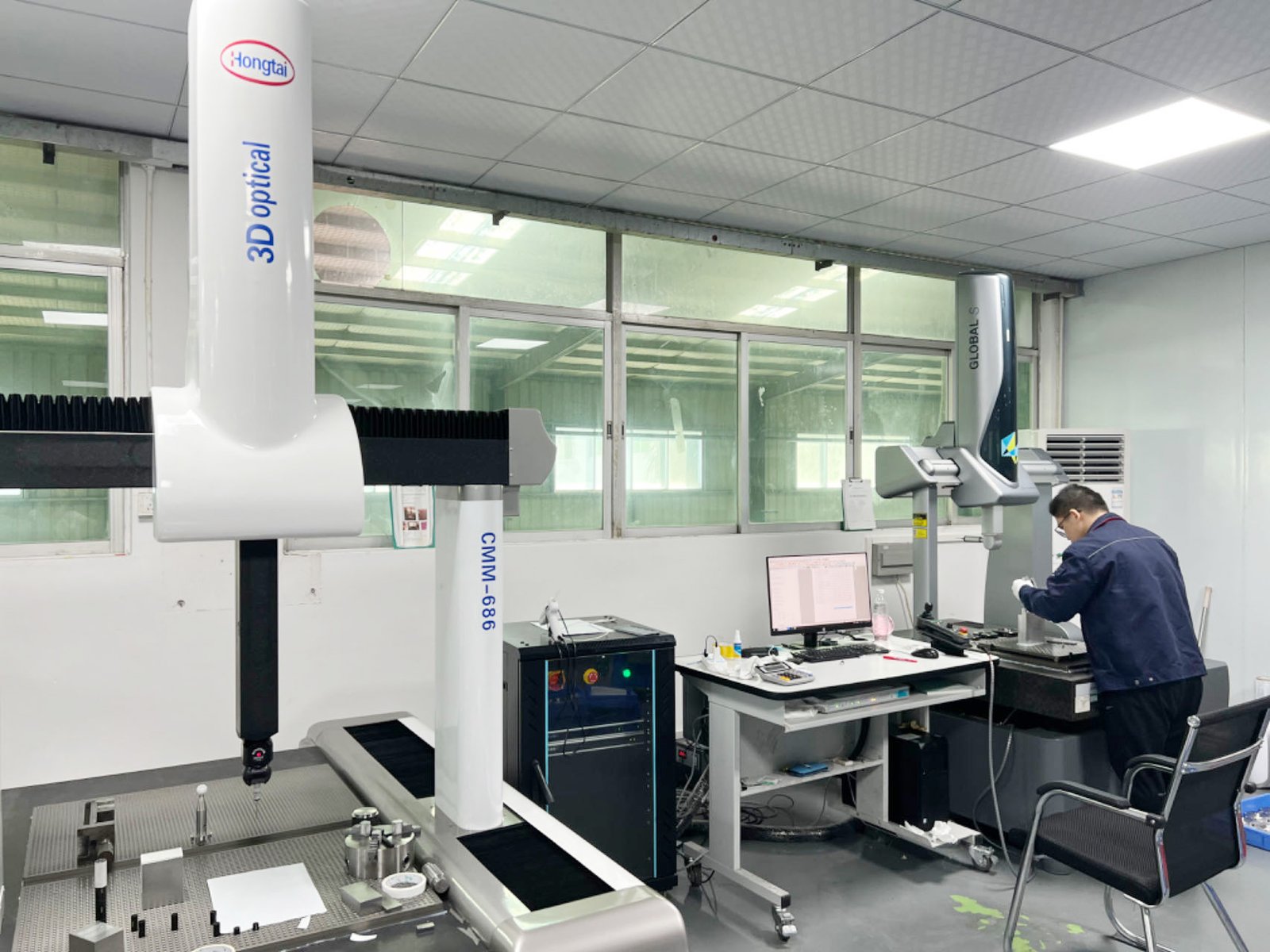
The traceability-backed quote also names who measures what. Critical dimensions go to Hexagon CMMs; surface and profile to a laser microscope and a SURFCOM; coating thickness to a Fischer gauge; material composition to XRF checked against the mill certificate. When the quote states the gauge, the date it implies is defensible, and the schedule it carries is one the shop can actually keep.
A quote with named gauges is a quote with a plan for verification, and verification time is part of the schedule. When the measurement method is stated up front, the buyer knows the parts will be checked the way the drawing requires, and the date accounts for that check rather than hoping it fits afterward.
6. What the Traceability Record Ships with Your Order
The record that predicts the lead time is the same record that travels with the parts. It carries the material certificate, the batch and machine identity, the operator data, and the inspection results, so a question about a specific lot can be answered a year later, and a delay can be traced to its cause instead of blamed on "the supplier."
The same document, in other words, closes both loops: it planned the arrival, and it proves the part. One continuous chain, not two separate promises.
For a buyer this closes the loop between scheduling and trust. The document that let you plan the arrival is the document that lets you verify the part on arrival, and the two were produced by one continuous chain rather than two separate promises. That is what makes a lead time a date instead of a guess.
7. How Does the Step Count Set the Lead-Time Tier?
The step count is the lead time's engine. Every operation is a setup, a program, and a measurement, and each one adds handling time and queue time before the part moves on. A part with two operations lands in the ~3 day tier; a part with ten to twenty lands in the ~30 day tier.
The count is not estimated — it is read from the same MES/ERP record that will later prove the part. The traceability system already knows how many steps the part will pass through, because the process flow is defined before the first cut. A lead time built on that count is a schedule; a lead time built on a sales guess is a hope.
8. How Does Finishing Add Time to the Schedule?
Finishing and heat treatment add steps, and each step adds time, not just the process itself but the hand-off to a partner and the inspection that verifies the result. Anodizing, plating, and carburizing all push a part toward the longer tier.
| Added step | What it adds | Where the time goes |
|---|---|---|
| Anodizing / plating | Coating thickness to verify | Hand-off, process, inspection |
| Carburizing / heat treatment | Hardness and case depth to verify | Process, then re-measure after |
| Passivation | Corrosion verification | Short process plus inspection |
The record makes the added time visible rather than buried. A quote that names the finishing step and its inspection point is a schedule you can follow; a quote that folds finishing into "two weeks" with no breakdown is hiding the one step that most often slips.
9. How Does Redundancy Hold the Schedule Under Load?
Redundancy is what keeps a promise when the floor gets busy. With 100+ machines across milling, turning, mill-turn, and grinding, a job is placed on the right machine the day it is released, and a down machine does not stall the order — the load shifts to an equivalent center.
This matters most at peak season, when a single-machine shop becomes a single point of failure and every order behind it stretches. A floor with depth in each role absorbs the surge, so the date you were given at quote time is the date the record can actually deliver.
10. How Do You Ask for a Date You Can Hold a Supplier To?
An honest lead time names the steps, not just the days. When you ask for a quote, ask for the step breakdown alongside the date: the operations, the inspection points, the finishing hand-offs, and when each is expected to clear.
- Ask for the step count — a date without a step count is a hope.
- Ask which steps leave the floor — finishing and heat treatment are the usual slips.
- Ask for the date each step clears — a schedule you can check mid-run is a schedule you can hold.
- Ask what ships with the parts — the record that proved the schedule also proves the part.
Send your STEP, IGES, or 2D drawing to [email protected] with the quantity, target date, and finishing required, and the review comes back with a lead time read from the step count rather than guessed.
The minimum order quantity is 1 piece, so a prototype and a production run get the same dated schedule and the same traceability record.
A dated schedule backed by a step count is a plan that can be checked at each stage, which is the same discipline the record applies to the part itself.
Frequently Asked Questions
What are your lead times?
Roughly 3, 7, or 30 days depending on part complexity and process steps. Simpler parts ship in about 3 days; parts with surface finishing or many operations fall into the longer 30-day tier.
How does traceability shorten lead time?
It catches a deviation at the step where it happens instead of at your dock, and it ships the proof with the part so your incoming check is a confirmation rather than an investigation. Both remove delay, so the schedule you were given holds.
What determines lead time?
The number of process steps and any surface finishing or heat treatment, read from the traceability record rather than guessed. Fewer setups move a part down a tier; finishing or 10–20 process steps push it into the longer 30-day tier.
What is your minimum order quantity?
Our MOQ is 1 piece. We take prototype and single-part orders as well as production runs, so you can validate a design before committing to volume and still get a dated schedule.
How do I get a quote with a real lead time?
Email your STEP, IGES, or 2D drawing to [email protected] with the quantity, target date, and any finishing required. We return a review and a quote with a realistic lead time, usually within one business day.
Does the traceability record ship with the parts?
Yes. The material certificate, batch and machine record, operator data, and inspection results ship with the parts. Because the record is already attached, your incoming inspection confirms rather than investigates, which is itself a scheduling gain.
Send your drawing for a dated lead time.
Email [email protected] or call +86 13126536955 — the step count, not a guess, sets the date.